
“I don’t think you’re real,” Dr. Ito said softly, setting down her pen.
Kaito blinked, half expecting her to laugh, to say she was joking. She didn’t. Her expression didn’t change. The office stayed perfectly still — the clock on the wall, the soft hum of the air conditioner, the faint vibration from the trains outside. Everything stayed still except her eyes.
They didn’t blink.
He gave a nervous laugh. “That’s… strange thing to say to a patient.”
Dr. Ito folded her hands on the desk. “It’s strange only if it isn’t true.”
The fluorescent light above them flickered once, just a whisper of static. Kaito’s reflection on the glass cabinet behind her blurred, then steadied. He rubbed his eyes.
“I’ve been coming here for three months,” he said. “You know my name. You know my job. You know—”
“I know what you’ve told me,” she interrupted, calm as glass. “But you can’t recall the name of your workplace, can you?”
He froze. He opened his mouth to protest — and realized she was right. He worked in an office somewhere in Shinjuku, but the company’s name, the faces of his coworkers — they drifted like smoke in his mind. He could see the elevator buttons, the coffee machine, his desk — but not the people, not the words on the door.
Dr. Ito’s gaze never wavered. “What about your apartment? Can you picture the building from outside?”
He tried. All he could see was the hallway, the metal door, the same gray walls that never changed. He couldn’t see the street, or the neighbors, or even the stairs.
“I—of course I can,” he said quickly. “I just… I’m tired.”
Her voice softened. “You always say that.”
Kaito looked at her carefully. She hadn’t moved at all since the session started. Even the pen beside her notebook hadn’t shifted. He realized suddenly that he’d never seen her write anything down. Not once in three months.
The clock ticked louder now. The hum of the air conditioner stopped. Silence pressed against his ears.
“Tell me,” she said. “What did you dream about last night?”
He opened his mouth but hesitated. The dream — he could almost see it. Something with a mirror. No, not a mirror. A glass wall. Someone standing on the other side, looking exactly like him. The reflection spoke first.
“I don’t remember,” he lied.
Dr. Ito smiled slightly. “That’s all right. You’ll remember soon.”
He shifted in his seat, uncomfortable. “What’s that supposed to mean?”
“That memory loss is a form of protection,” she said. “When the mind can’t handle a contradiction, it erases the edges of it.”
He frowned. “What contradiction?”
She tilted her head, studying him as though he were an insect beneath glass. “That you were never born, Kaito.”
The words struck like a slap. He laughed again, forced. “You’re insane.”
“Perhaps,” she said, still calm. “Or perhaps you are.”
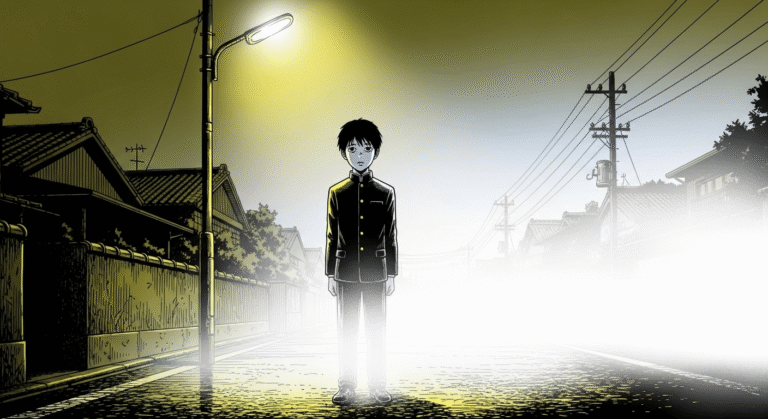
Something in her tone made his throat tighten. He glanced at the window behind her. The city outside was hazy — buildings swallowed by white fog. No cars. No movement. Not even a bird.
He looked back at her. “This is some kind of test, right?”
She didn’t answer.
“Dr. Ito,” he said sharply. “Tell me where I work.”
Her eyes softened. “You tell me.”
His mind scrambled for something — anything — but every image dissolved before it formed. His desk. His coffee mug. His boss’s voice. All fragments with no edges, floating in gray mist.
He stood up suddenly. “I’m done with this.”
She nodded slowly. “You always say that too.”
He stopped. “What?”
“You’ve left before,” she said. “But you always come back.”
“I’ve never—” he began, then stopped. Because she was right again. He had the strange sense of déjà vu — the same conversation, the same room, the same flicker of the light above him. Maybe not once. Maybe hundreds of times.
He stared at the clock. The second hand ticked backward.
“Sit down, Kaito,” she said softly. “You’ll only get lost again.”
He turned toward the door. The knob felt cold, wet. He pulled it open. The hallway beyond was dimly lit, walls stretching too far, no sound except the distant hum of electricity. He stepped out.
Dr. Ito’s voice drifted after him. “Remember what you told me on your first visit? That you felt like you were walking through a dream.”
The door closed behind him on its own.
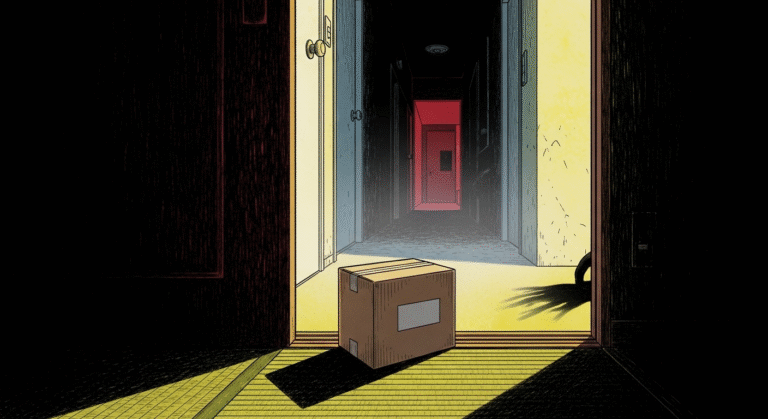
The hallway twisted strangely. Each turn led to another identical corridor. Doors lined both sides, each with a small plaque.
Room 203. Room 203. Room 203.
He swallowed hard. He ran his hand along the wall — cool, rough. He picked one door at random and pushed it open.
It was the same office. Same clock. Same flickering light.
Dr. Ito sat at her desk.
She smiled gently. “You came back.”
He stumbled backward, heart pounding. “This isn’t real.”
She gestured to the chair. “Neither are you.”
He slammed the door. His breath came fast, shallow. He walked — no, ran — down the hall, but the walls stretched, warping, bending. The air grew thicker. He looked back once; the door was gone. Only more walls.
He shouted. His voice echoed endlessly.
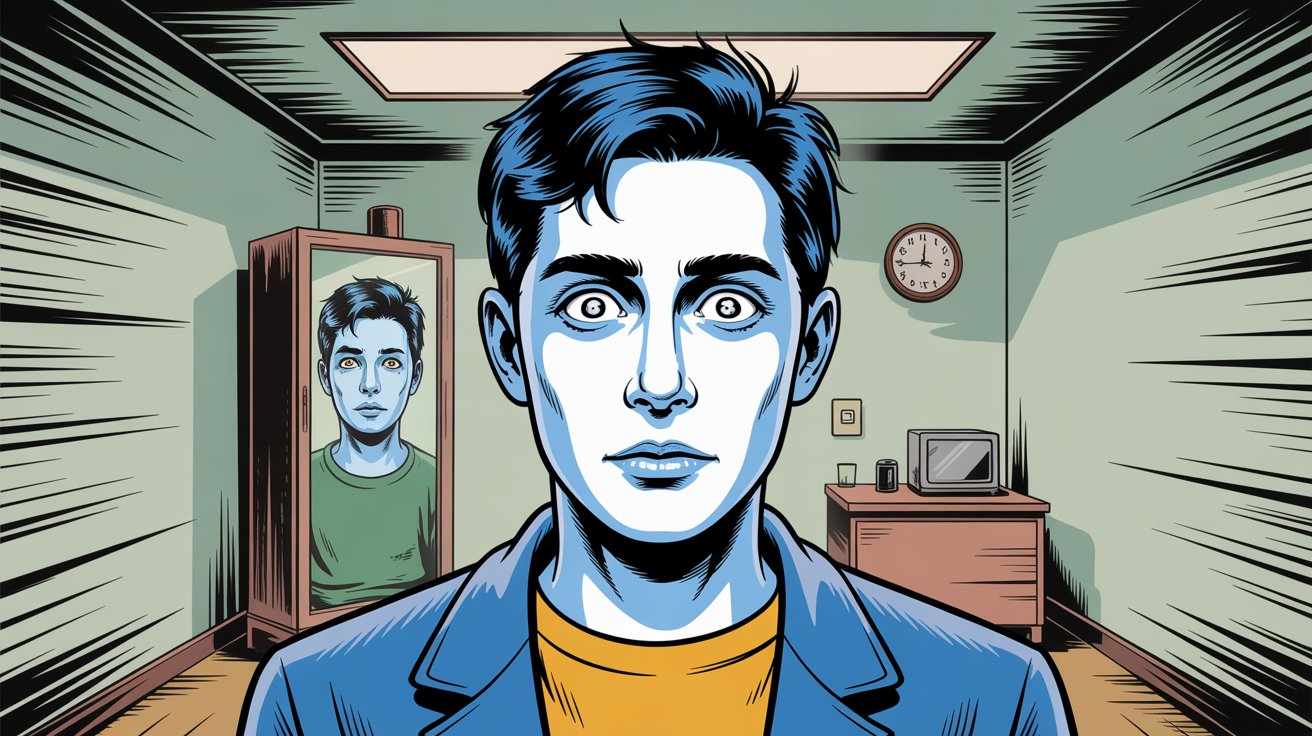
Then, suddenly, a mirror appeared at the end of the corridor — tall, framed in black. His reflection looked pale, trembling. But something was wrong. The reflection wasn’t breathing.
He stepped closer. The figure in the glass tilted its head. Then it smiled.
Kaito staggered back. “No—”
The reflection mouthed the words soundlessly: I don’t exist either.
The glass rippled like water.
He turned and ran.
When he woke, he was sitting in the same chair again. Dr. Ito was watching him.
“You fainted,” she said.
He grabbed his head. His temples throbbed. “How did I—”
“You never left,” she said.
“That’s impossible,” he whispered.
“Is it?” she asked gently. “Look around. Has anything changed?”
He looked. The same coffee cup on the shelf. The same pen on the desk. The same clock ticking backward.
He stood again, shaking. “I’m going home.”
She nodded. “Then tell me how to get there.”
He froze.
He could picture his apartment hallway, but beyond that — nothing. He couldn’t even remember which train line he took to get here.
Dr. Ito’s smile didn’t fade. “You see? You can’t go somewhere that doesn’t exist.”
He backed away from her. “Stop saying that.”
“You asked me to help you remember,” she said softly. “And I’m helping you.”
“Remember what?”
“That you’re part of someone else’s memory.”
Her words hung in the air like smoke.
“What are you talking about?”
She leaned forward slightly. “There was an accident. Years ago. A young man — you — died. But he left behind pieces of himself: memories, habits, dreams. Those fragments formed something that believed it was whole.”
“That’s ridiculous,” he snapped. “I’m right here.”
“Are you?” she asked. “Have you ever seen your reflection clearly?”
He stopped. His reflection in the glass cabinet shimmered again — faint, unstable. His face flickered between solid and transparent.
Dr. Ito stood slowly. Her movements were deliberate, almost mechanical. “You come here every day, Kaito. You sit, you talk, and you forget. I tell you the truth, and you begin again.”
He shook his head violently. “You’re lying!”
She sighed softly. “That’s what you said yesterday too.”
He grabbed the diary lying on her desk. His handwriting covered the pages — the same sentence repeated:
I am real. I am real. I am real.
He stared at the words until they blurred. “Why are you doing this to me?”
“I’m not doing anything,” she said. “I’m only observing.”
He looked up. “Observing what?”
“How long a memory fights before it fades.”
He threw the diary down. “You’re not a doctor.”
“No,” she said quietly. “I’m a projection. You created me to explain yourself to yourself.”
The room tilted. The edges of everything began to blur. The air hummed like static. His vision rippled.
“Stop,” he whispered. “Stop it!”
“You can’t stop what isn’t moving,” she said.
The walls dissolved into white light. The city outside melted into mist. He saw shapes flickering — buildings, faces, all transparent. He saw himself reflected in thousands of windows, each slightly different. One older, one younger, one with no face at all.
Then, silence.
Kaito blinked. He stood in the middle of a small apartment. Familiar — yet sterile. The clock ticked 3:00 a.m. Neon from the streetlights washed the room in blue. He sat down on the couch, breathing hard. The city outside looked frozen. No movement. No sound.
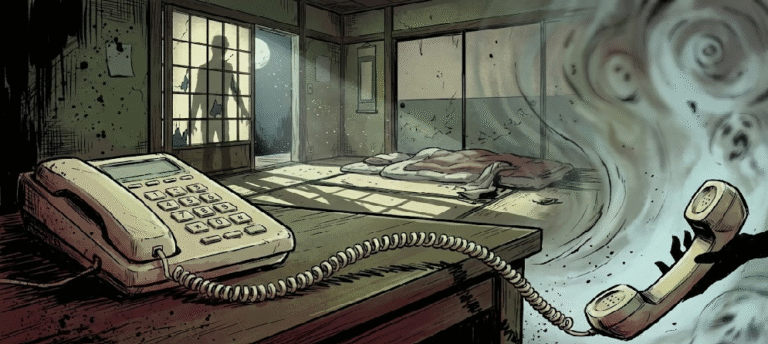
His phone buzzed.
Unknown number.
Session today at 9 a.m. Don’t be late.
He dropped the phone. It landed beside a small notebook on the table — his handwriting on the cover: Therapy Notes. He opened it. The first page read:
Dr. Ito says I’m not real. Maybe she’s right.
He flipped the page. Blank. Then another. Blank.
Then, suddenly, fresh ink appeared — words writing themselves:
Wake up, Kaito.
He stumbled backward. The walls pulsed faintly. The hum of the city started again, faint but rising. His vision blurred. He looked toward the mirror near the door.
His reflection stared back — but the reflection’s mouth was already moving before his own.
“You’re late,” it said silently.
He ran.
Morning.
He sat once again in the same chair. Dr. Ito smiled politely. “Good morning, Kaito. How are you feeling today?”
He stared at her, trembling. “We did this already.”
She tilted her head. “Did what?”
“This session. This conversation.”
“I think you’re confusing your dreams with reality again,” she said kindly. “You’ve had a rough week.”
He leaned forward. “Tell me something that proves I’m real.”
She paused. Then: “If you weren’t real, you wouldn’t be afraid.”
He almost believed her. Almost. Until the clock ticked backward again.
He looked up slowly. “Why does it keep doing that?”
“What?” she asked.
“The clock,” he whispered. “It’s going backward.”
She glanced at it — perfectly normal, ticking forward. “It isn’t.”
He laughed shakily. “Of course it is. You can’t see it because you—”
He stopped. Her face had frozen mid-blink. The air froze too. Time itself seemed to halt. The room dimmed to gray.
Then, faintly, another voice behind him: “She’s not supposed to see it. You are.”
He turned.
A second version of himself stood by the door. Same face, same clothes — but colder eyes. “You figured it out again,” the reflection said softly. “But you always forget.”
“What are you?” Kaito whispered.
“I’m the first,” the other said. “The real one. You’re the copy. You’re what the therapist built to keep me sane.”
Kaito shook his head violently. “No—no, that’s not true.”
“Isn’t it?” the reflection asked. “You’re sitting in a chair that doesn’t exist, in a building that isn’t there. You’re talking to a woman who’s nothing but code from my memory. You’re the dream that remembers dreaming.”
The reflection stepped closer. The world flickered between light and shadow. “You fade every time you remember.”
Kaito backed into the wall. “I don’t want to fade.”
“You already are,” the reflection whispered.
Dr. Ito’s voice returned, soft, calm. “Kaito? Are you all right?”
He looked back — she was blinking again, alive, unaware of the distortion. The reflection was gone.
He sank into the chair, hands shaking.
“Maybe,” he whispered, “maybe I don’t want to be real.”
Dr. Ito smiled. “That’s progress.”
That night, he wrote in his notebook again.
I think I understand now. If I don’t exist, then neither does the fear. Maybe that’s freedom.
He closed the notebook and placed it on the table. The city outside hummed softly, rain streaking the window. He felt calm. For the first time, he didn’t feel lost.
Then the phone buzzed.
Unknown number.
Session today at 9 a.m. Don’t be late.
He stared at the message for a long time. The clock ticked backward once, then forward again.
He smiled faintly.
The next morning, Dr. Ito greeted the new Kaito like she always did — as if none of the others had ever existed.