
At first, Noah thought he was waking up in the wrong part of his room.
Then he realized his bed had actually moved.
The flat in Cornwall was small and plain, nothing special, but Noah liked that. His mum said it was a “fresh start,” and Noah tried to believe her. The first week went fine. New school, new routines, the hum of gulls outside the window. Everything felt normal.
Until the morning he woke up to find his desk chair facing his bed instead of the wall.
He frowned at it for a long moment, still half–asleep. He didn’t remember touching it. Maybe he’d bumped it last night. That seemed possible. So he pushed it back into place and forgot about it.
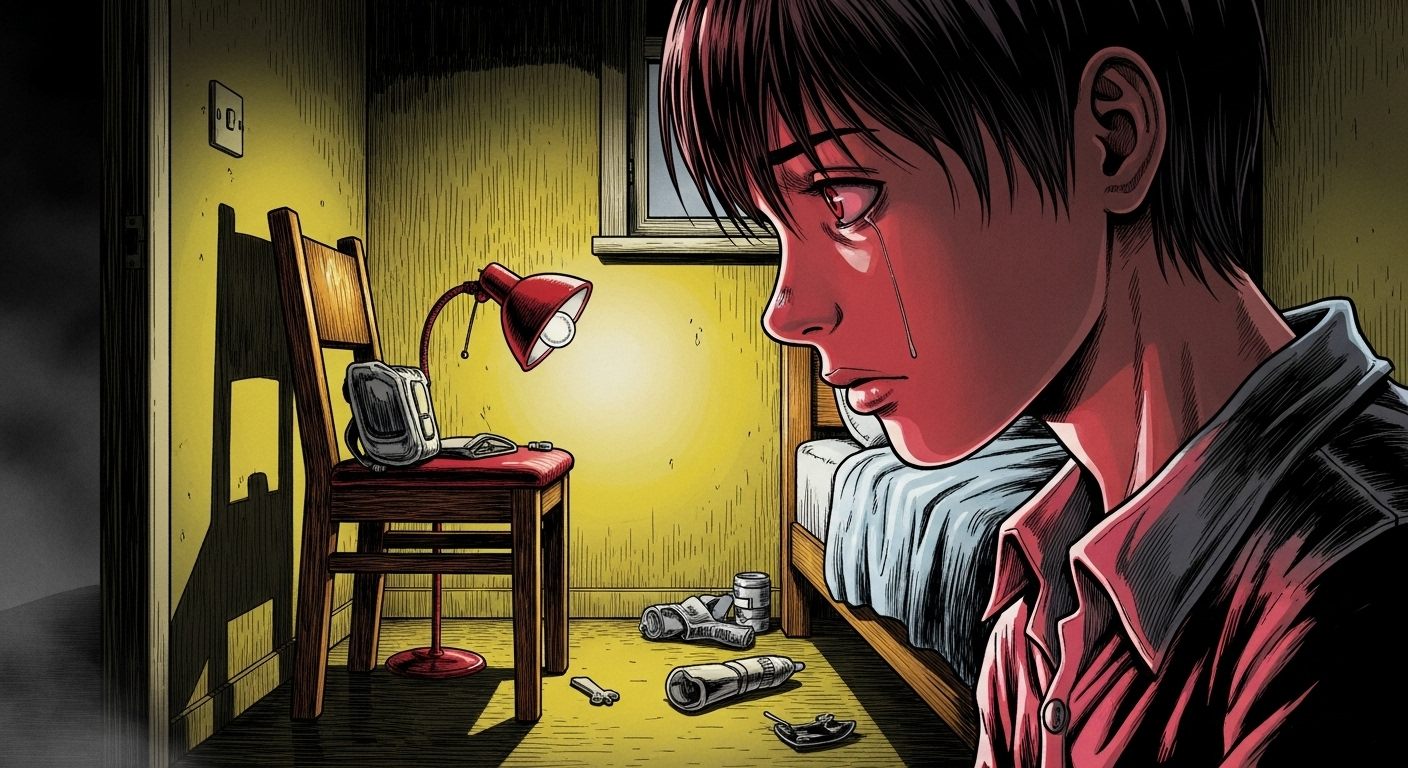
But the next morning, his bedside table had shifted a few inches left. Not a lot. Just enough to notice. His lamp leaned dangerously close to the edge, like someone had shoved the table without care.
Noah crouched beside it and checked the floor. No marks. No scuffs. The table sat on thick carpet. It shouldn’t slide easily.
He told himself the carpet was uneven. Or maybe he’d kicked it in his sleep. That idea didn’t fit, but he went with it anyway.
On the third morning, his entire bed was angled away from the wall. Not by much—just a subtle turn, as if someone had pushed the bottom corner with steady hands. Noah stood there, staring, his breath stuck in his throat.
He stayed quiet at breakfast, poking at his cereal while his mum talked about her shift. He wanted to say something, but the words felt silly. “Hey Mum, my bed moves when I’m asleep.” She’d tell him to stop staying up so late. Or that he was dreaming. Or that stress could make rooms look different.
So he kept it to himself.
The next day he placed small objects on the carpet around the bed—a pencil, a coin, a tiny paper clip. He lined them up in a neat row. If the bed moved, they’d get disturbed.
When he woke the next morning, the objects were gone.
Not kicked aside. Not scattered. Just gone.
His bed had moved again too. A slow, careful shift, the angle slightly sharper than before.
Noah searched the floor on his hands and knees. Nothing. No pencil. No coin. No paper clip.
He sat back and stared at the empty carpet. His chest tightened. Someone had been in his room. He felt it now—the cold edge of that idea settling behind him like a shadow.
That night he kept the overhead light on. He lay stiff under his covers, eyes wide, listening to the flat breathe in the quiet. His mum closed her door across the hall. The pipes hummed. Wind tapped the window. He stayed awake until exhaustion pulled him under.
He woke with the sunrise glowing pale on his curtains.
The bed had turned again.
And the overhead light was off.
Noah’s pulse hammered. He hadn’t turned it off. He knew he hadn’t. His fingers curled hard into his blanket. His throat felt tight and dry.
He needed proof. Real proof.
So later that day, he moved his desk chair into the center of the room. Then he placed his guitar case in front of the door, angled so anyone pushing the door open would knock it over. He checked it twice to make sure nothing was wobbly or loose.
Then he went to bed early and lay awake again. He stared at the ceiling. Minutes dragged by. The house settled around him. He listened so closely his ears ached.
At some point he drifted off.
When he woke, everything was different.
The chair had been placed beside his bed, facing him.
His guitar case stood upright against the wardrobe, perfectly balanced.
The bed had shifted so far that the headboard no longer touched the wall.
Noah bolted upright, muscles trembling. His breath came quick and sharp. The air felt too still, like something had been in the room only moments before. His skin prickled with cold.
He reached for the lamp.
The switch clicked.
Nothing happened.
The bulb had been loosened.
Noah stumbled back, knocking into the bed frame. He stared at the lamp, his heartbeat thudding in his ears. Someone had stood right beside him in the night. They’d touched his lamp. They’d moved his things. They’d arranged them neatly, almost thoughtfully.
He forced himself to whisper, “Who’s here?”
The room didn’t answer.
The silence felt thick. Heavy. Watching him.
After school, Noah finally told his mum. She laughed at first, thinking it was a joke, but when she saw how tightly he held himself, her smile faded.
“We’ll check the locks tonight,” she said gently. “Maybe there’s a draft pushing things. Old buildings get weird airflow.”
Noah nodded even though he knew drafts didn’t sort guitar cases or angle beds.
They checked every window. Every lock. Everything was sealed and solid.
That night, Noah couldn’t face sleeping with the light off. His mum understood and left the hallway light on. A soft yellow glow seeped under his door.
He lay there, gripping his blanket, staring at the faint line of light. His room felt wide and cold. The shadows seemed to stretch when he wasn’t looking directly at them.
At some point, his eyes closed.
He woke to the sound of wood scraping.
His stomach dropped. He didn’t move. He didn’t breathe.
Something shifted in the dark. A slow drag across the carpet. Then another. A pause. Another slow movement, deliberate and patient.
Noah’s breath hitched. He rolled his eyes toward the foot of the bed.
The hallway light was gone.
His room was completely dark.
He reached for the lamp with shaking fingers. The switch clicked, and the lamp flickered to life. Soft light filled the room.
The chair was now right at the edge of the bed. As if someone had dragged it there and sat in it, watching him sleep.
A small, neat pile of his missing objects rested on the seat—pencil, coin, paper clip—placed gently as if returned.
Noah felt cold rush through him. His throat tightened.
He didn’t look away from the chair, not even when he whispered for his mum. She hurried in, confused, blinking at the bright light and the way Noah stared at the chair as if it might move again on its own.
She reached to pick up the objects.
But they slid off the chair before she touched them, falling to the carpet one by one without making a sound.
Noah flinched. His mum froze.
The room went still again.
Later, when she told him they’d sleep in the living room that night, Noah didn’t argue. He gathered his things quickly. His hands shook the whole time.
As he stepped into the hallway, he glanced back into the room.
The chair had turned.
Just slightly.
Just enough to face the door.
As if whoever had been using it wanted one last look as he left.