
The first time Aarav noticed it, he thought it was just his imagination.
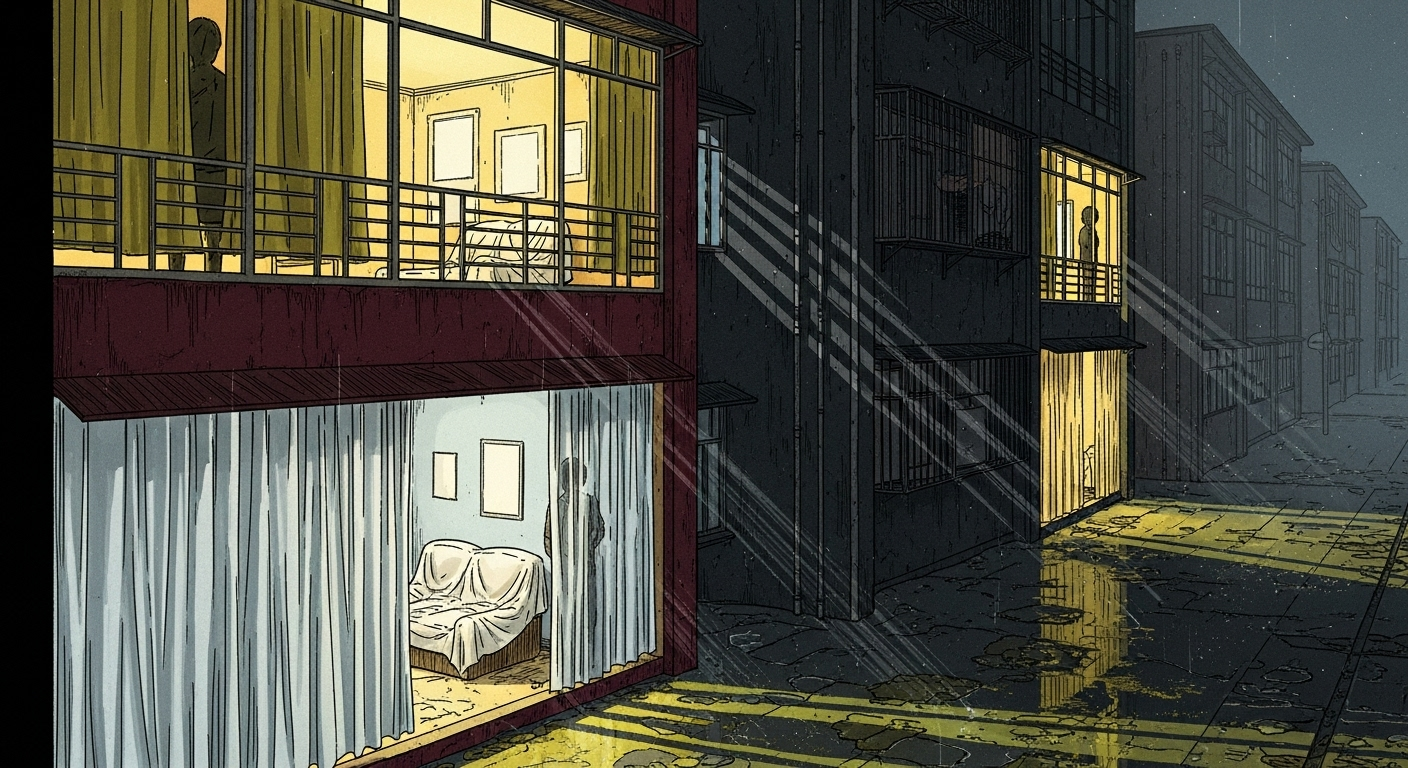
Across the narrow street, an apartment on the seventh floor glowed brightly, every light burning, windows wide open, though it was well past midnight.
He had been walking home from a late cricket practice, earbuds in, the humid Mumbai night clinging to his skin. The street smelled faintly of wet asphalt and fried snacks from the nearby stall. The apartment building had always seemed ordinary, quiet, almost forgettable. But tonight, that one unit—its lights piercing the dark—felt wrong.
Aarav slowed. The glow was too steady, too deliberate. No TV flicker, no shadows of people moving. Just light. Warm, even, unbroken.
He shrugged. “Maybe they forgot to turn it off,” he muttered, though his voice sounded hollow to his own ears.
Still, as he passed, a sense of unease crawled up his spine. He glanced back once. The apartment hadn’t changed. Every windowpane glowed as if someone—or something—was watching.
The next evening, Aarav’s curiosity grew. He walked the same route home. Again, the lights were on, exactly the same, though the building appeared empty.
He asked the night guard, an older man sitting on a rickety chair at the gate.
“Seventh floor, sir?” the guard asked.
“Yes. Apartment 703.”
The man frowned. “703? Nobody lives there, son. Not for months. Owner moved to Delhi.”
Aarav frowned. “But the lights…”
The guard shrugged. “Lights don’t move. Maybe someone broke in. But no one reports it. Strange, yes.”
That night, the lights burned all evening. Through the window, Aarav swore he saw faint silhouettes, shifting ever so slightly behind the curtains.
The third night, he couldn’t resist. He told himself he was just checking—seeing if anyone was really there.
From the street, he watched. Windows framed the room like golden rectangles, casting a glow over the narrow road. He spotted a shadow near the balcony. Small, crouched, unmoving.
A low sound rose—a hum, almost musical, barely audible. Aarav strained, but it stopped whenever he focused too hard.
His hands were clammy. He wanted to call someone, anyone, but the thought of leaving felt heavier. He had to know.
The next day, Aarav returned with a flashlight. The lobby was empty. The elevator smelled faintly of old dust and polish. He pressed the seventh-floor button. It dinged softly.
When the doors opened, the hallway was empty. The faint hum of the building’s air conditioning was the only sound. Apartment 703 was at the far end.
The door was slightly ajar. A dim, steady light spilled out into the hall.
He pushed it gently. The door creaked. Inside, the room looked ordinary—furniture covered in white sheets, a faint layer of dust, the air warm, as if someone had been there all day. Yet the lights burned brightly, all of them, as if they refused to go out.
He stepped closer. Shadows shifted along the walls—soft, elongated. He blinked. The room felt larger than it should, almost stretching away into darkness behind the curtains.
A faint whisper rose, so soft he thought it was the hum in his ears.
“Aarav…”
He froze.
The voice was his own. Not like a recording, not an echo, but something mimicking him perfectly.
He stumbled back. The lights flickered for a second, then steadied. Curtains rustled though the air was still.
He ran, heart hammering, down the hallway, through the elevator, out onto the street. Outside, the building looked normal, quiet, empty. The seventh-floor windows darkened as if nothing had ever been lit.
That night, he couldn’t sleep. Every time he closed his eyes, he saw the lights, glowing steadily through the rain-soaked streets. He imagined stepping closer—walking into the room, into the shadows, feeling the humming in his chest.
Morning came. Aarav forced himself to leave the apartment complex, walking slowly, trying to shake the memory.
Weeks passed. Life continued, ordinary and mundane. Yet every night, no matter where he was, the seventh-floor apartment’s lights seemed to flicker in his mind, steady and relentless.
Then, one evening, he passed the street again. The building looked normal. He exhaled in relief. No lights. No glow. Nothing unusual.
Yet from across the street, a soft click made him freeze. A single window slid open—small, deliberate.
A figure—vague, blurred—stood behind the curtain.
It mimicked him perfectly. Hands, stance, posture. He couldn’t tell where the figure ended and shadow began.
Aarav turned, heart racing. When he looked back a second later, the window was shut. The apartment dark. Empty.
But the memory lingered. A single, impossible thought pressed against his mind:
The lights had never truly gone out.
And somewhere inside, someone—or something—had been waiting.